


Cutter suction dredging
Cutter suction dredging cuts and pumps almost any soil, from sand to soft rock. At its heart sits the cutterhead, and that is where HDI specialises: cutterheads, cutter teeth, adapters and wear parts for CSDs from 50 to 12,000 kW.
What is cutter suction dredging?
Cutter suction dredging is a stationary dredging method in which a rotating cutterhead mechanically loosens the soil while a centrifugal dredge pump draws the resulting mixture of water and soil up through a suction pipe. The mixture is then transported, usually through a floating and onshore pipeline, to a reclamation area, a disposal site or a hopper barge.
Unlike a trailing suction hopper dredger, which sails while it dredges, a cutter suction dredger stays in a fixed position and works a defined area with great precision. This makes cutter suction dredging especially suitable for hard and compacted soils and for projects that demand accurate depth and profile control.
How does a cutter suction dredger work?
A CSD works in a continuous cycle of cutting, suction and transport. Understanding that cycle explains why the cutting equipment has such a large impact on production.
Excavation and suction
A rotating cutterhead, fitted with cutter teeth, breaks up the soil at the bottom of the ladder. The loosened material is immediately drawn into the suction mouth and pumped through the pipeline by one or more dredge pumps. Because excavation and suction happen at the same point, the CSD can handle everything from free-flowing sand to stiff clay and soft rock.
Staying in position: spuds and swinging
While dredging, the CSD is held in place by a spud, a heavy vertical pole lowered into the bed. The dredger cuts in an arc by swinging sideways around the working spud, hauling in on one anchor wire while paying out the other. This swinging motion sweeps the cutterhead through the soil and delivers the accuracy CSDs are known for.
Stepping forward
At the end of each swing the dredger has to move forward to start the next cut. With a fixed-spud system the working and auxiliary spuds are raised and lowered in turn to “walk” the dredger ahead, which is simple but involves more unproductive time. A spud carriage is more efficient: it lets the dredger push forward on the working spud over a set distance (a “stroke”) before the spud is repositioned, keeping the cutterhead in the cut for longer.
Shifting anchors
As the dredger advances, its side anchors eventually lie too far back to swing effectively and must be relocated. A CSD with an anchor boom can shift its own anchors; without one, a workboat is needed. Together, swinging, stepping and anchor handling let a CSD dredge a complete section to an exact profile.
The cutterhead: the heart of a CSD
The cutterhead is where a cutter suction dredger earns, or loses, its production. It is the rotating steel structure at the end of the ladder that carries the cutter teeth and does the actual excavation. Its shape, the number and layout of the arms, and the cutting geometry decide how efficiently the dredger converts installed power into cubic metres per hour.
A cutterhead matched to the soil and to the vessel’s power range cuts more in less time, spreads wear evenly and reduces the load on the drive and pump. A poorly matched head wastes energy, wears unevenly and shortens the life of teeth and adapters. This is why HDI treats cutterhead design as an engineering discipline in its own right, with in-house engineering and reverse engineering to reproduce or improve existing OEM designs.

Key components of a cutter suction dredger
Beyond the hull and the dredge pump, a CSD relies on a handful of wear-critical components that need regular inspection and replacement. These are exactly the parts that determine uptime, and the parts HDI supplies:
Cutter teeth
The replaceable cutting points that make first contact with the soil. Tooth shape and material are matched to the ground, whether sand, clay or rock, for maximum penetration and life. HDI supplies all leading Esco-, Vosta- and IHC-style tooth systems.
View cutter teeth →
Cutterhead
The rotating excavation tool. HDI designs and manufactures cutterheads for all major OEM systems (ESCO, VOSTA, IHC), for all soil types and for power ranges from 50 kW to 12,000 kW.
View cutterheads →
Adapters
The base that connects each tooth to the cutterhead. A reliable adapter is the foundation of a stable tooth system and a precise, repeatable fit.
View adapters →
Wear protection and components
Wear protection (wear shrouds, weld-on material) and structural components protect the cutterhead itself and extend service intervals, often the difference between planned and unplanned downtime.
View wear protection →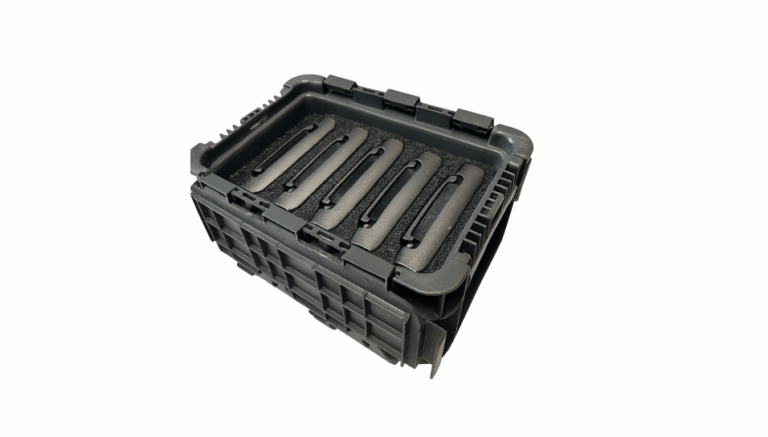
What can a cutter suction dredger dredge?
One of the biggest advantages of cutter suction dredging is its range. Because the cutterhead loosens the soil mechanically before it is pumped, a CSD can work materials that other dredgers cannot:
- Sand and gravel: high-volume production for reclamation and sand winning.
- Clay and compacted soils: where mechanical cutting is essential.
- Soft rock and moderately strong rock: with heavy-duty rock cutterheads and teeth.
This versatility makes CSDs the workhorse for land reclamation, port and harbour construction, waterway and channel maintenance, mining and mineral extraction, and reservoir and environmental dredging. The soil dictates the cutterhead and tooth choice, which is why matching the cutting equipment to the ground is so important.
Maximising CSD production and uptime
For an owner or operator, cutter suction dredging comes down to two numbers: how many cubic metres per hour the dredger produces, and how many hours it actually runs. Both are driven by the cutting equipment.
- Cutting geometry: a head optimised for the soil increases production in m³/hour at the same installed power.
- 1-to-1 fit: teeth and adapters that fit existing IHC-, Vosta- and ESCO-style systems exactly, with no rework.
- Lead times: a stock strategy on common types and in-house production keep spares available and downtime short.
- Cost vs OEM: competitive pricing versus OEM parts while retaining performance.
Because HDI keeps engineering and production under one roof, cutterheads, teeth and adapters can be designed, produced and delivered through a short supply chain, so the dredger spends more time cutting and less time waiting for parts.
Why source your cutter suction cutterhead, teeth and adapters from HDI
Holland Dredging Industries is a specialist in the cutting side of cutter suction dredging. Where vessel builders and contractors cover the whole ship, HDI focuses on the components that wear, break and need replacing, and engineers them to perform:
- All major OEM systems: cutterheads, teeth and adapters for ESCO-, VOSTA- and IHC-style systems.
- Full power range: cutterheads from 50 kW to 12,000 kW, for sand, clay and rock.
- Engineering under one roof: 3D engineering, reverse engineering and proprietary cutterhead design software.
- Stock and logistics: a stock strategy on common types and worldwide shipping for short lead times.
- Support in any language, 24/7: technical support on selection, wear analysis and optimisation.
HDI supplies operators and yards worldwide, from a single inland CSD to a global fleet of cutter dredgers, working to OEM-equivalent quality without OEM prices.
Frequently asked questions
How does a cutter suction dredger work?
A cutter suction dredger loosens soil with a rotating cutterhead and immediately pumps the mixture of water and soil through a pipeline to its destination. It stays in a fixed position on a spud and cuts by swinging sideways in an arc.
What is the difference between a cutter suction dredger and a trailing suction hopper dredger?
A cutter suction dredger is stationary and cuts hard, compacted soils with a rotating cutterhead, pumping the material through a pipeline. A trailing suction hopper dredger sails while dredging and collects softer material in an onboard hopper. CSDs are chosen for precision and for harder ground.
Which OEM systems does HDI supply parts for?
HDI supplies cutterheads, teeth, adapters, wear protection and components compatible with ESCO, VOSTA, IHC and other leading cutter systems, all from a single supplier. Existing designs can be reverse-engineered from a 3D scan, drawing or sample.
Do HDI parts fit existing systems 1-to-1?
Yes. HDI parts are 1-to-1 interchangeable with existing IHC-, Vosta- and ESCO-style systems, so no rework is needed. Fit is secured with high-resolution 3D scanning and reverse engineering, with tolerances down to ±0.5 to 1.0 mm on critical mating surfaces.
What are HDI’s lead times for cutter suction dredger parts?
Standard teeth and adapters ship in 2 to 7 days from stock, with express delivery in 24 to 72 hours depending on type and location. Components typically take 2 to 6 weeks, or 6 to 10 weeks for complex welded constructions. Complete cutterheads are engineered to order, with a lead time of around three months depending on size and complexity.
How do HDI’s prices compare to OEM?
For equivalent quality and fit, teeth and adapters are typically 15 to 40% below OEM pricing, and components 10 to 40% below. Cutterheads and custom-engineered parts offer even larger savings, and framework contracts and volume orders add further advantage.

Contact us – anywhere, anytime
Request your quote today and find out how we can support your dredging projects.